
🧭 The Brain’s Gyroscope: The Vestibular System
Discover how the vestibular system powers your balance, posture, and movement with real-time brain feedback. This is the hidden key to fixing chronic pain and reclaiming control.

Why do you feel off but no one can tell you why?
There’s a hidden system in your body running twenty-four hours a day. It is not your muscles. It is not your joints. It is a sensory GPS in your ears constantly recalibrating your posture. When it misfires, you feel unstable, tired, and tight no matter how much you stretch.
Even when you're perfectly still, your brain is running diagnostics. Every millisecond, it is receiving microscopic feedback from sensors embedded deep in your skull. These sensors don’t just help you balance. They decide if your body stays upright or falls apart.
What Is the Vestibular System?
Every time you tilt your head, shift your weight, or even blink, your brain is recalculating your body’s position in space. The vestibular system has two key parts.
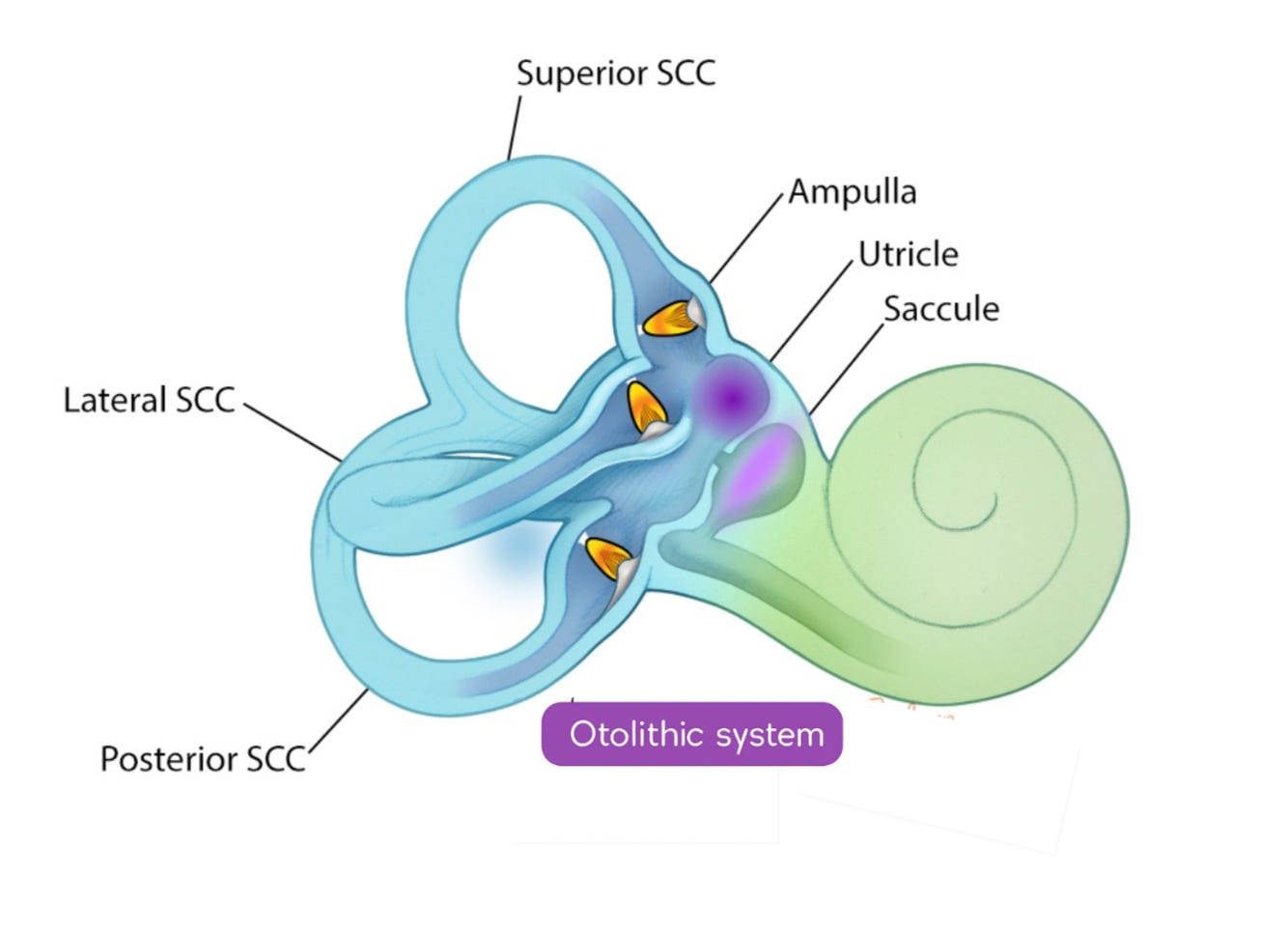
1.Semicircular canals: Three tiny loops that detect head rotations—like glancing at your phone or nodding to music.
2.Otolithic organs: The otolithic system is made up of two structures, the utricle and the saccule. These are located in the vestibule of the inner ear and contain sensory hair cells. Sitting on top of those cells is a gel-like layer that holds tiny crystals called otoconia. These crystals are constantly reacting to changes in head position.
Try this now: bring your feet together, close your eyes for 20 seconds. Wobble much? Thats your vestibular system talking. This is the foundation of posture, where your brain starts calling the shots.
No matter how much you stretch, lift, or align your spine, your posture will never stay fixed if your vestibular system is sending your brain the wrong signals.The Otolithic System: Your Inner GPS
Inside your inner ear, there are tiny structures called otolith organs, and inside those organs are crystals, suspended in a gel-like layer. This system never shuts off. Even when you are perfectly still, your otolithic organs are sending a steady stream of information to your brain. It is constant. It is background. It never stops.
These sensors are always tracking where your head is in relation to gravity. As you walk, sit, or reach for a glass, your brain’s map of your body is adjusting. That map must be accurate to keep you stable. But if even one sensory entry point like a foot, an eye muscle, or a jaw joint is sending blurry or confusing data, the map gets distorted.
That signal is being reported twenty-four hours a day. And your brain is constantly adjusting your posture based on that input. This is why your posture does not stay corrected after stretching.
Beneath the crystals are hair-like sensory receptors that bend as the crystals shift. This microscopic movement triggers electrical signals that travel directly to your cerebellum the part of your brain that governs posture, coordination, and balance. This is not just balance in the way we think of standing upright. This is about how your entire body communicates spatial awareness.
          Want a quick daily reset? Check out the 5-Minute Posture Fix for a fast,
                              effective way to improve alignment from head to toe.
2. The Cerebellum Is Not Just Reacting It Is Predicting
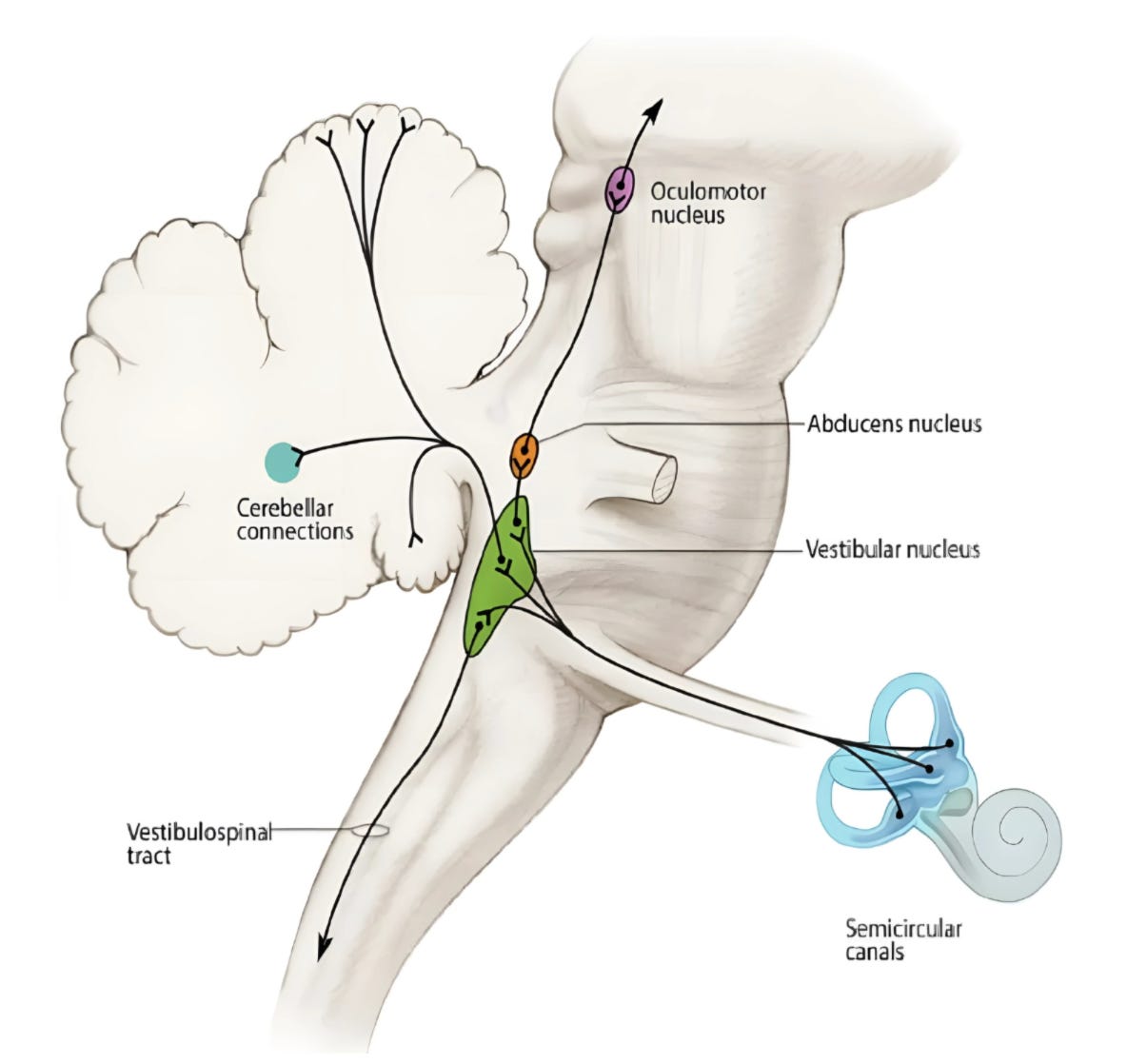
Think of the cerebellum as a prediction engine. It doesn’t just react. It forecasts.
When vestibular data arrives, the cerebellum uses it to:
Compare what the body is doing with what it should be doing
Coordinate the fine motor control required for balance
Adjust posture based on shifts in gravity and acceleration
The cerebellum then sends precise orders to your body, controlling:
How strongly your muscles contract to keep you upright.
How firmly your joints stabilize to prevent wobbling.
How your head aligns with gravity to maintain a level gaze and balanced posture.
If the incoming vestibular data is flawed, the cerebellum’s predictions go off track. This miscalibration leads to poor posture, inefficient movement, and sensory disorientation. Over time, it becomes a chronic pattern your body normalizes.
That’s why so many people feel "off" but can't explain why.
Your body might overcorrect, tightening your neck, tilting your hips, or flaring one foot outward into that duck feet pattern to feel stable.
These micro adjustments add up, causing uneven shoulders, a slouched spine, or chronic pain that stretching can’t fix. Your posture suffers because the brain is working with bad intel, not because your muscles are weak.
4. Faulty Input Creates Chronic Compensation
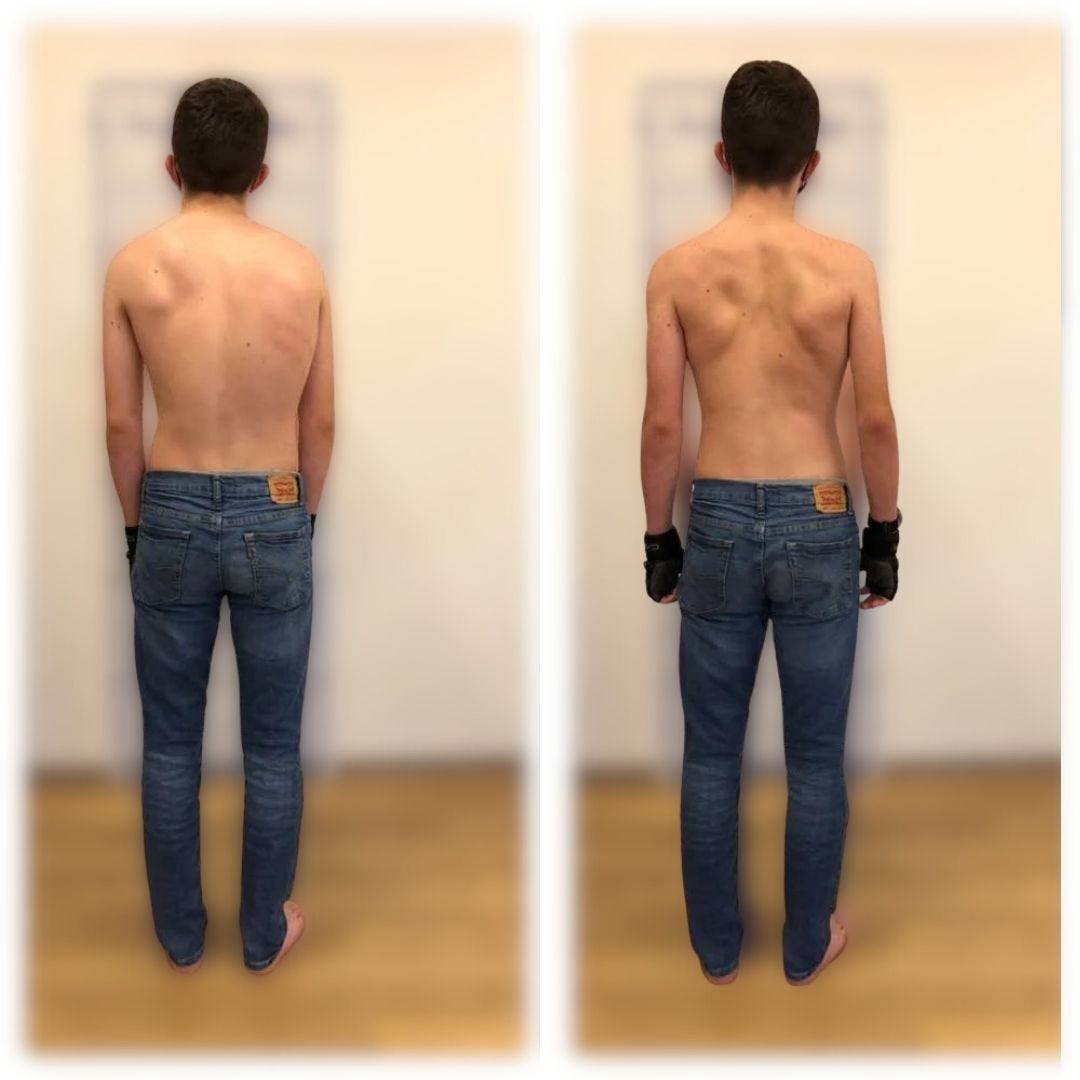
Posture is not just how you hold yourself. It is your brain’s prediction of how much effort it will take to stay safe in the next moment. When it feels stable, the prediction is efficient. When it feels threatened, the body tightens and compensates.
This means your posture is less about strength and more about trust your brain’s trust in the sensory signals it is receiving. When that input is distorted due to an underactive vestibular system, a lazy eye, or flat feet the brain guesses. And when the brain guesses, the body compensates.
These compensations often show up as:
Uneven muscle tone
One shoulder higher than the other
A persistent hip shift
Tension that returns minutes after stretching
scoliosis
You may feel like your body just will not stay aligned. The problem is not in the muscles. The problem is in the information those muscles are following.
The Eyes and Vestibular System: Dual Sensory Integration for Postural Control
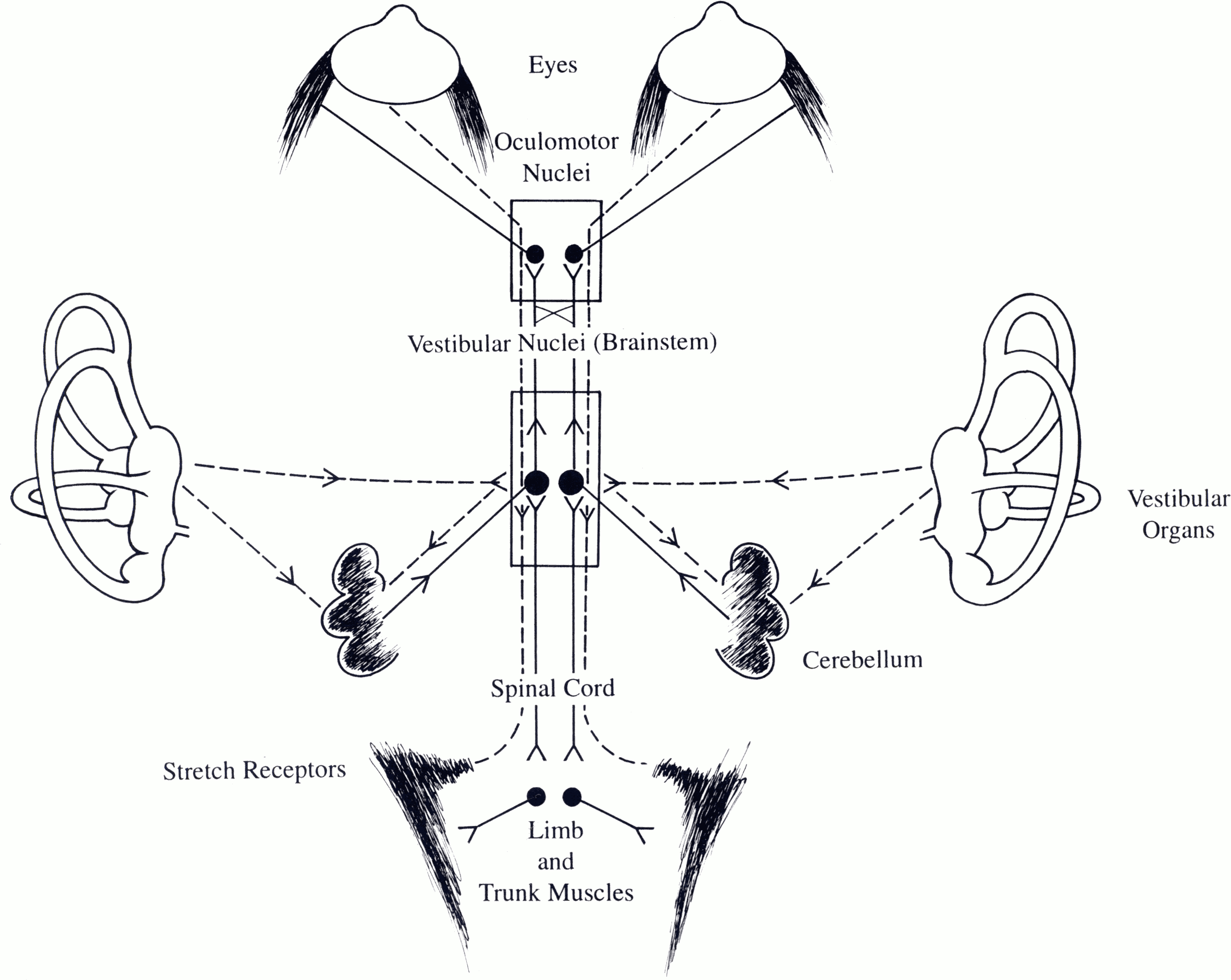
The eyes and the inner ear form a bidirectional communication loop that informs the cerebellum of head orientation, spatial positioning, and environmental reference points.
The vestibulo ocular reflex (VOR) stabilizes gaze during head motion by driving ocular movement in the opposite direction of the head. This reflex is fundamental to postural orientation. When functioning properly, it allows for clear visual fixation during locomotion.
When impaired, the reflex becomes unstable. This instability leads to sensory mismatch discrepancies between where the body is and where the brain perceives it to be.
The cerebellum, which integrates visual and vestibular signals, responds to this mismatch by altering motor output.
The result is observable: anterior head carriage, scapular elevation, pelvic asymmetry, or external rotation of the feet. These are not musculoskeletal issues. They are compensatory motor programs designed to reestablish equilibrium under faulty input.
Visual tracking deficits, have been shown to reduce postural precision, increasing reliance on secondary stabilizers such as the cervical extensors and hip flexors. Over time, this creates neuromuscular overactivation in regions unrelated to the origin of dysfunction.
The key is not to treat the posture. The key is to recalibrate the input.
Vestibular Dysfunction: The Invisible Root of Poor Posture
Most people associate vestibular problems with vertigo or balance disorders. But the effects are far more subtle and widespread.
Signs of a sluggish or dysregulated vestibular system include:
Chronic neck tension
Shoulder tightness or asymmetry
Headaches that start at the base of the skull
A constant need to "stretch" but never feel relief
Trouble focusing while walking or driving
If this sounds familiar, it’s because your brain is compensating for inaccurate vestibular feedback. It is working harder to stay balanced. Muscles tighten as a fallback mechanism. And your posture suffers as a result.
The Fix Lives in the Feedback
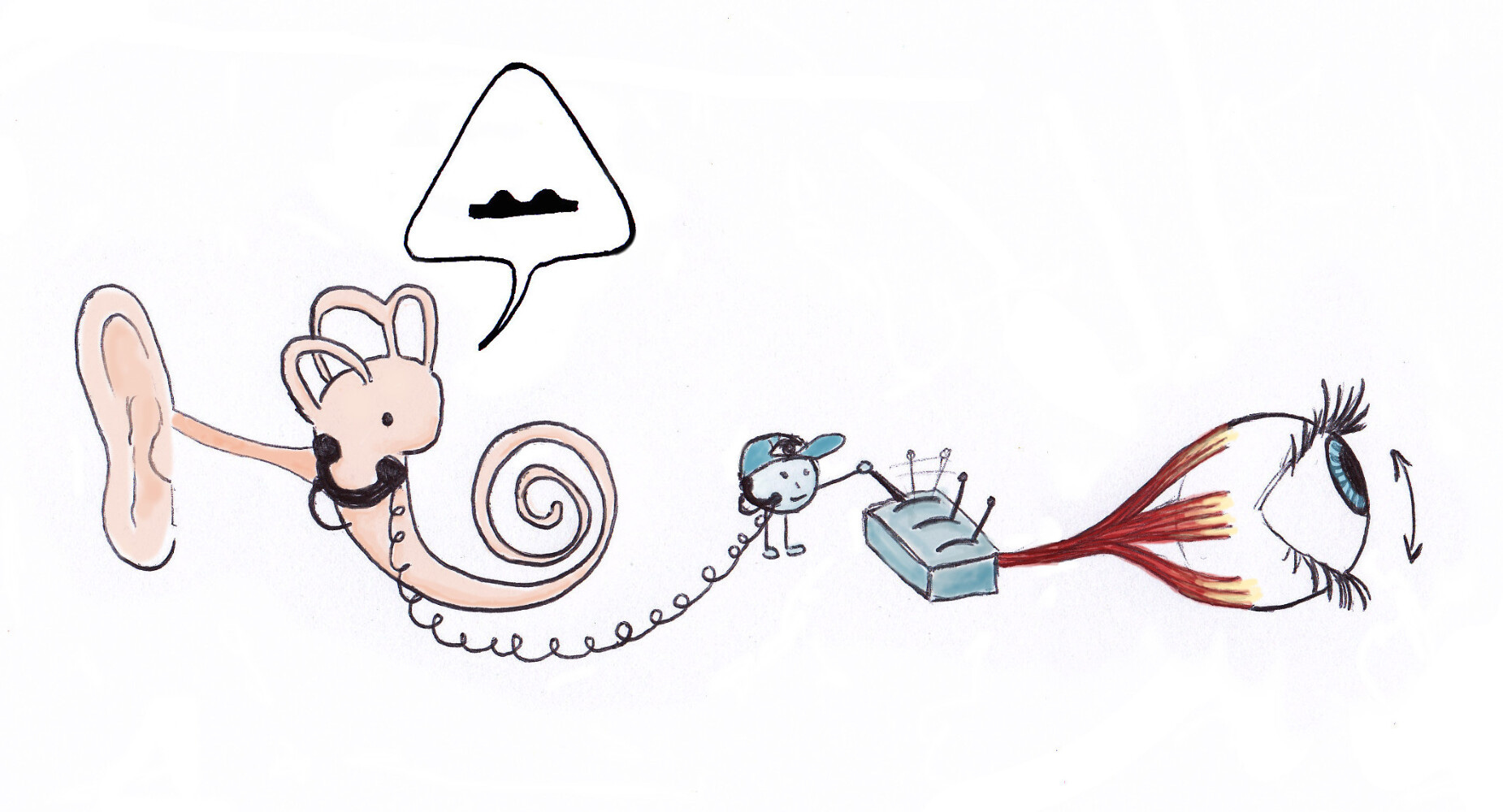
By targeting the vestibular system directly, you address the root input your brain relies on to command posture. This is upstream from muscles, joints, or even bones. It is sensory first. Motor second.
Fix the input. Change the output.
💡 If you’re ready to go deeper, our full Course Pack which includes NeuroVision which will give you the tools to understand and fix posture long term by addressing the body as a whole. Everything starts with the brain, and these courses show you exactly how to support it, step by step.
Get the full Vestibular Reset Protocol. Designed to rewire your sense of balance and posture from the brain down.
Great article. Very useful. Some very cool diagrams - where do they come from?